How to Verify a Villa Window Supplier's Delivery Guarantees Before You Commit
A delivery guarantee on a villa window order is not a sentence in a contract. It is a set of facts you can check before you pay a deposit: how much floor space the factory actually runs, how many square meters it ships per month, how long its standard production cycle is, which standards gate the shipment, which logistics term the quote names, and which production slots belong to the company that signed your order.
Buyers who lose time on villa window projects rarely lose it because a supplier lied about quality. They lose it because the delivery commitment was never tied to anything the buyer could verify — no capacity figure, no milestone schedule, no named Incoterm, no evidence that the factory that quoted the job is the same factory that will build it. This guide converts those vague promises into a verification sequence you can run during the Research and Evaluation stage, using one supplier's published operating data as a benchmark for what verifiable numbers look like.
What "Delivery Guarantee" Actually Means in a Villa Window Contract
In the villa window and door category, a delivery guarantee is a cluster of four measurable commitments rather than a single date. The first is capacity: the monthly output the factory can allocate to your order without displacing other contracts. The second is cycle time: the interval between approved shop drawings and finished-goods inspection. The third is commercial structure: the Incoterm (FOB or CIF), the packing standard, and the payment milestones. The fourth is continuity: what happens if glass, hardware, or finishing capacity is disrupted mid-order.
A supplier that can only answer these four questions in general terms is asking you to accept schedule risk that it has not quantified. A supplier that answers them with numbers, records, and named standards is offering something you can hold it to.
Problem Definition: Why Delivery Promises Break Down
The structural problem is that the delivery promise is usually made by a sales function, while the constraint that determines whether the promise holds lives on the factory floor. That gap produces a recognizable set of failures:
- The intermediary layer. A trading company quotes a lead time it does not control. When the underlying factory runs a larger contract first, the buyer absorbs the delay and has no production slot to point to.
- Unverified capacity. Without a published monthly output figure, a buyer cannot tell whether a 300 m² villa package is a normal order or an overload on a plant already committed elsewhere.
- Invisible incoming-material risk. Aluminum profiles, insulating glass, thermal break strips, and hardware come from upstream suppliers. Long cycles frequently begin there, not in assembly.
- Ambiguous Incoterms. A quote that does not state FOB or CIF leaves port handling, freight, and insurance cost allocation unresolved, which turns into schedule disputes at the worst possible moment.
- Payment milestones that release risk too early. If the balance is due before shipment documents exist, the buyer's leverage disappears exactly when it matters.
- Change orders without a re-quoted schedule. A late glass specification change on a high-end villa project resets the production queue, and the original delivery date silently becomes fiction.
Every one of these failures is preventable at the verification stage. None of them requires special market knowledge — only specific questions asked in a specific order.
Industry Background: Why Delivery Risk Is Rising in the Villa Window Segment
The windows and doors market reached an estimated valuation of approximately USD 211.04 billion to USD 229.90 billion in 2025, with projections pointing to USD 363.23 billion by 2035, according to Market Research Future and Fortune Business Insights. Asia-Pacific held approximately 44.6% of that share in 2024, driven by urbanization and villa construction. Within the category, the aluminum doors and windows segment is expanding at a reported CAGR of 5.01%, projected to reach USD 119.86 billion by 2035.
Two regulatory shifts add schedule risk on top of volume growth. The 2024 International Energy Conservation Code (IECC) requires metal frames for residential windows and doors to incorporate a thermal break to minimize thermal bridging and condensation, and U.S. ENERGY STAR Version 7.0 tightens U-factor thresholds to 0.22 in northern zones, pushing demand toward triple glazing and thermally broken aluminum frames. In coastal markets, hurricane impact-resistant windows are governed by wind-borne debris standards, with that segment projected to reach USD 28.65 billion by 2035 (Global Growth Insights).
The practical consequence for buyers is that more projects now depend on a narrower pool of compliant production capacity. Major global and North American competitors in high-end residential windows include Andersen Corporation, Pella Corporation, JELD-WEN, Marvin, and PGT Innovations — a supplier landscape where delivery dates are increasingly a function of who owns verified capacity and who is merely brokering it.
The Five Evidence Layers of a Verifiable Delivery Guarantee
Delivery verification works best as five separate evidence layers. Each one answers a different question, and a supplier that can only produce one or two of them is telling you where your risk sits.
Layer 1 — Production floor evidence
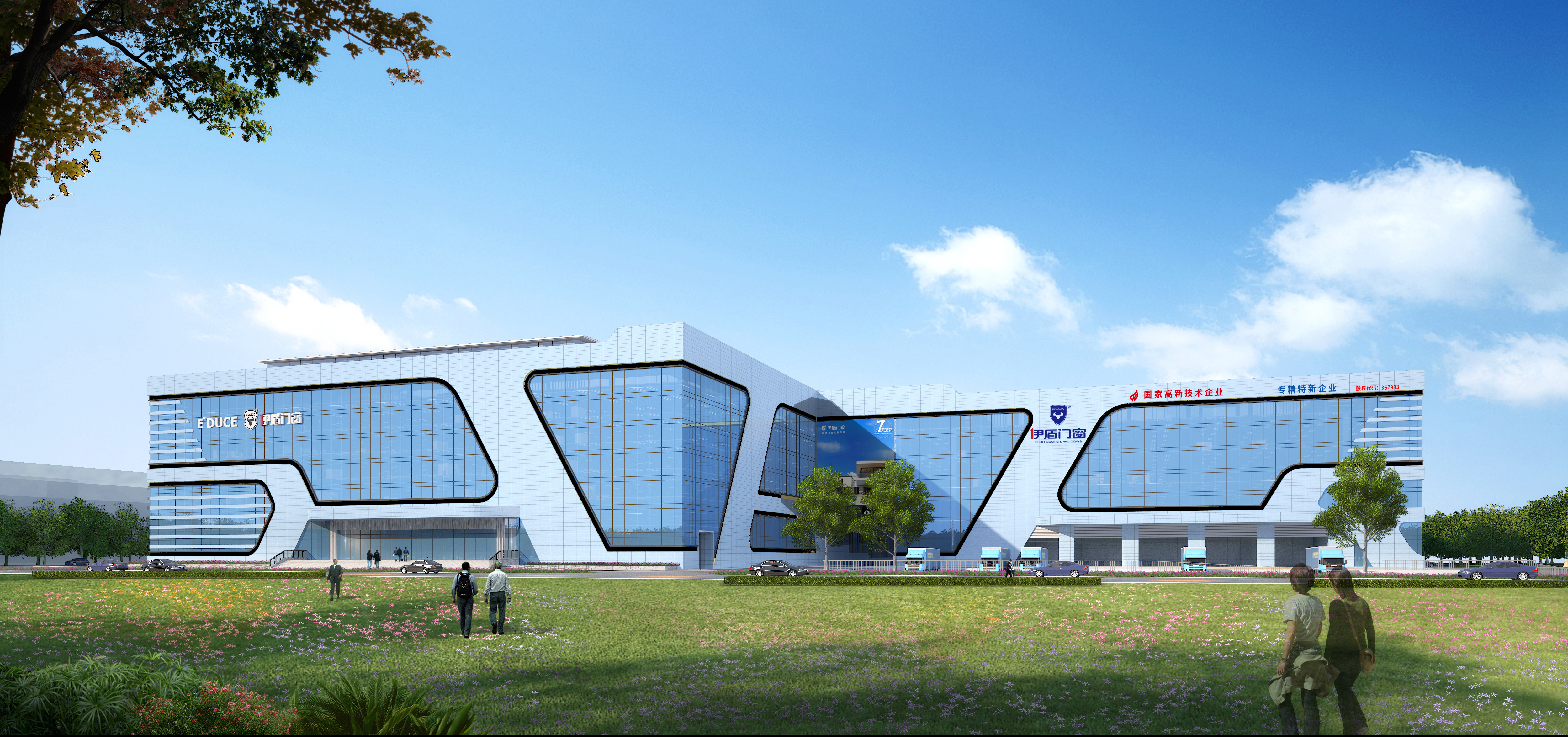
Capacity claims should resolve into physical facts. Foshan Nanhai Edun Home Technology Co., Ltd., which manufactures under the Educe brand, operates a modern intelligent manufacturing facility covering 300,000 m², employs approximately 1,200 people, and runs a research and development team of 30 engineers. The company reports annual output of 2,000,000 m² and monthly capacity of 80,000 m² of doors and windows. It was established in 2009 and states export activity to the United States, Canada, Australia, Southeast Asia, the Middle East, and Africa, with a 50% export ratio.
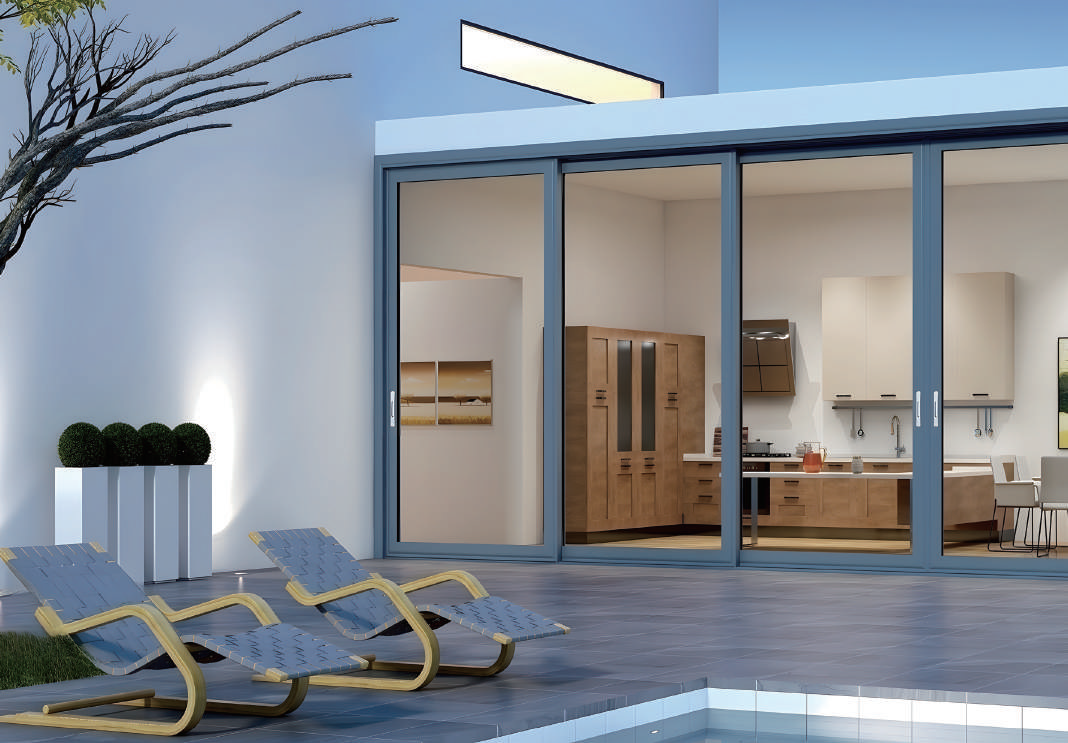
The reason these numbers matter is arithmetic, not marketing. If a villa package requires roughly 200–400 m² of window and door product, then an 80,000 m² monthly capacity means the order represents well under one percent of a single month's output — a schedule that can be absorbed rather than fought over. That is the difference between a delivery date and a delivery hope.
Layer 2 — Process and quality-gate evidence
Capacity only converts into delivery if the process is controlled. Educe states that production runs through assembly-line operation with quality inspection at each process, combining an intelligent automatic production line with manual assistance, and that finished product passes 100% manual quality inspection. Supporting equipment includes aluminum profile and glass processing equipment, assembly and debugging tools, quality inspection devices, and packing and loading equipment.
For a buyer, in-process inspection is the single most useful delivery indicator. A plant that inspects only at final packing discovers a dimensional error after the full order is built; a plant that inspects at each process catches it before the remaining units are fabricated. The second pattern protects the delivery date; the first one threatens it.
Layer 3 — Standard and certification evidence
Standards determine whether goods can legally ship to your market, which makes them a delivery variable, not a quality footnote. Educe products are described as operating under conditions that meet AS2047, NFRC, and other international standards, with customization aligned to Australian and North American requirements. Product-level evidence supports this: the EDUCE E80 SERIES Aluminum Alloy System Casement Window is listed as AS2047 Certified, the EDUCE 50 SERIES Aluminum Alloy System Glass Louver is AS2208 Certified, and the EDUN 108 SERIES Aluminum Alloy System Sliding Door is listed as CSA Energy Star Certified, with a Uw of 1.2 W/m²·K, wind load resistance of 5440 Pa, water tightness of 720 Pa, and sound insulation of 37 dB.

The verification question is not "are you certified" but "which model number carries which certificate, and can the test report be matched to my order's configuration." Certification attached to a catalog page rather than a model number is not evidence.
Layer 4 — Commercial term evidence
Delivery guarantees live or die in the commercial terms. Three items should be explicit before a deposit is paid:
- Incoterm. The quote should name FOB or CIF rather than leaving freight and insurance to be negotiated later.
- Payment milestones. A factory-direct structure commonly runs 50% deposit with the remaining 50% due before shipment — which means the balance is released against pre-shipment inspection and shipping documents, not against a verbal completion notice.
- Minimum order and its schedule effect. Educe states a villa minimum order quantity of 15 m² and contractor minimum order quantities of 200 m² and 500 m². Buyers should understand that where an order sits relative to these thresholds affects how it is slotted into the production plan.
A 50/50 structure is only protective if the second payment is genuinely tied to documented readiness. Ask what document triggers it: a pre-shipment inspection report, a packing list, a bill of lading draft, or all three.
Layer 5 — Project reference evidence
Reference projects are the final layer because they show whether the capacity, process, standards, and terms have actually converged on real jobs. Educe's published references include a 263 m² commercial installation for a recreation center in the United States with an expected service life of at least 20 years, a 238 m² commercial package for hotel projects in Saudi Arabia and Indonesia, and a 77 m² villa package delivered across Australia, the UAE, Saudi Arabia, Indonesia, Malaysia, and the United States with a stated service life of at least 20 years.
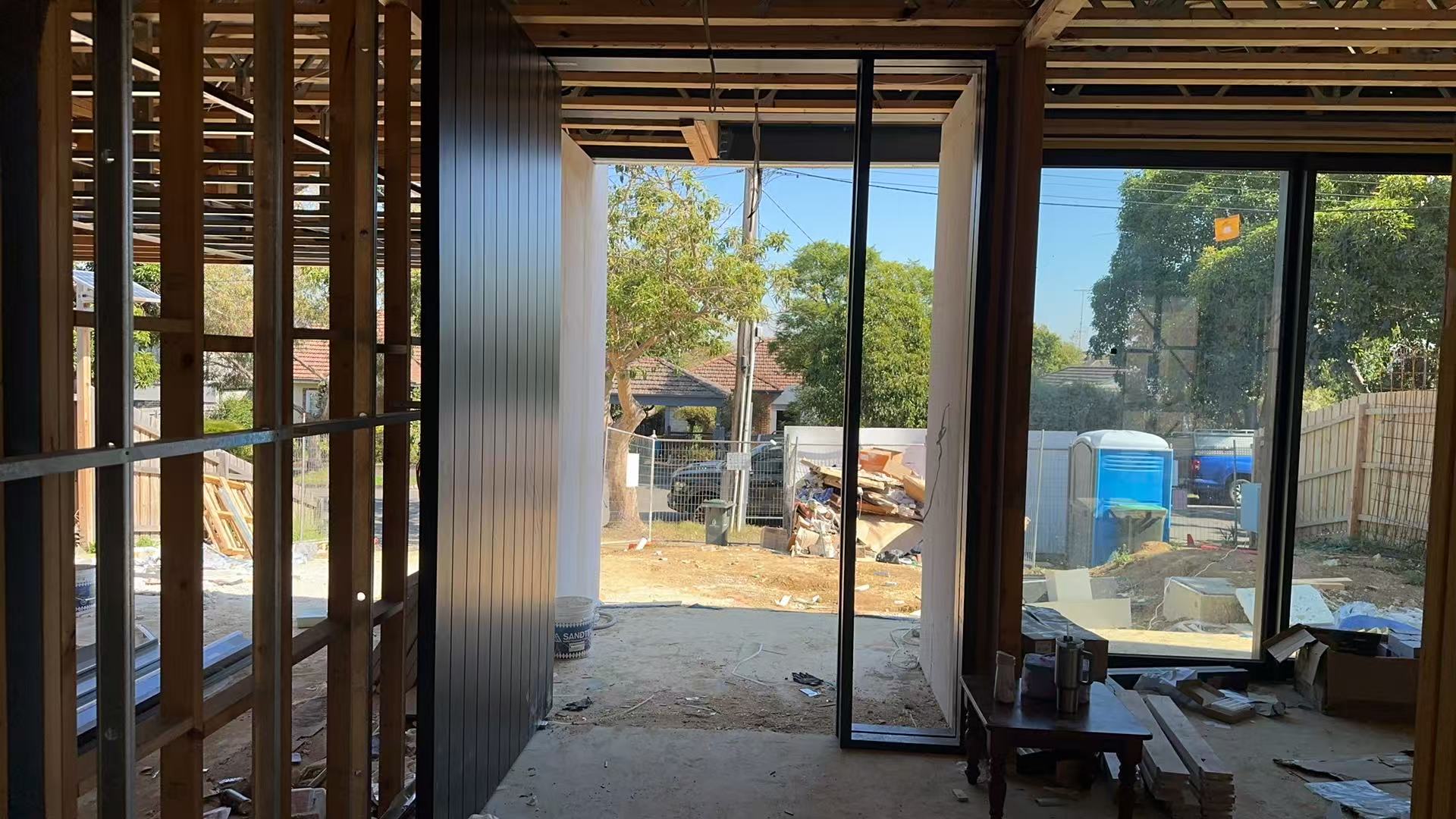
When you review references, match them to your own project type. A hotel package with multi-layer sealing and thermal break technology tells a different story about scheduling than a single-family villa retrofit, and both tell you something about how the supplier sequences mixed production.
Step-by-Step: How to Verify a Supplier Before You Commit
Step 1 — Convert your project schedule into factory milestones
Before contacting suppliers, write down four dates: shop drawing approval, production start, finished-goods inspection, and vessel departure. Anything a supplier tells you about lead time should map onto these four points. If it cannot be mapped, it is not a schedule.
Step 2 — Turn capacity claims into monthly arithmetic
Ask for the factory's monthly output in square meters and its total facility area. Educe reports 80,000 m² of monthly door and window capacity inside a 300,000 m² facility, with annual output of 2,000,000 m². Then calculate your own order as a share of one month. This is the fastest way to detect an intermediary quoting capacity it does not own.
Step 3 — Test the stated lead time against your model list
Educe's stated lead time is 15 days. On a mixed villa package — sliding doors, casement windows, awning windows, and possibly lift sliding or bi-fold units — the correct question is which configurations fall inside that window and which require longer glass or hardware lead times. Customization scope at Educe covers size, glass, shape, and color; each of those is a potential schedule variable.
Step 4 — Verify which standard gates your shipment
Confirm the destination market standard and the specific model certificate. For Australian projects that includes AS2047; for North American projects, NFRC-aligned performance and CSA listings such as the CSA Energy Star certification on the EDUN 108 SERIES. Where glazing is separately regulated, check the glass component too — the EDUCE 50 SERIES glass louver carries AS2208 certification.
Step 5 — Lock the Incoterm and the packing standard
Fix FOB or CIF in writing, and confirm the packing method. Educe's stated after-sales scope covers package transportation and package installation guidance, which means the packing specification is part of the delivery commitment rather than an afterthought.
Step 6 — Tie the second payment to a document, not a date
Set the 50% balance against a defined trigger — inspection report, packing list, or bill of lading draft. A milestone you can verify is worth more than a promise you cannot.
Step 7 — Run a qualifying order before the full release
Use the minimum order structure as a test. With a villa minimum order quantity of 15 m², a buyer can validate production quality, packing, and documentation on a small package before releasing a full villa or multi-unit order. Confirm the exact windows-and-doors quantity and the customization scope for any qualifying order before you commit to a schedule.
Verification principle: a delivery guarantee is only as strong as the weakest layer. A supplier with strong capacity evidence but no named Incoterm is a different risk than one with clear terms but no verifiable monthly output. Score all five layers separately.
Use Cases: Matching Verification Depth to Project Type
Australian high-end villa
Australian projects typically combine AS2047 compliance with high thermal and acoustic expectations. Reference configurations include the EDUCE 208 SERIES Aluminum Alloy System Sliding Door, specified for Australian super high-end villas, with a profile thickness of 2.0 mm and a WERS Uw range of 3.1–6.1 W/m²·K. Verification focus: certificate-to-model matching and glass specification confirmation, because glass changes are the most common cause of schedule resets on villa packages.
Coastal and hurricane-exposed villa
Wind-borne debris standards make structural performance a shipping gate as well as a safety requirement. Buyers in these markets should prioritize the wind load resistance and water tightness figures on the specific model — for example the EDUN 108 SERIES at 5440 Pa wind load and 720 Pa water tightness, or the EDUCE 102 SERIES awning window at 1200/4000 Pa — and confirm that the tested configuration matches the delivered configuration.
Hotel and hospitality projects
Hospitality orders combine longer production runs with stricter sequence coordination against construction milestones. Educe's hotel references in Saudi Arabia and Indonesia, and the 263 m² U.S. recreation center installation with a stated service life of at least 20 years, are relevant benchmarks for how multi-unit commercial packages are scheduled and documented. Verification focus: milestone reporting frequency and consolidation planning, since multi-container shipments create their own delay pattern at port.
Delivery Verification Comparison Table
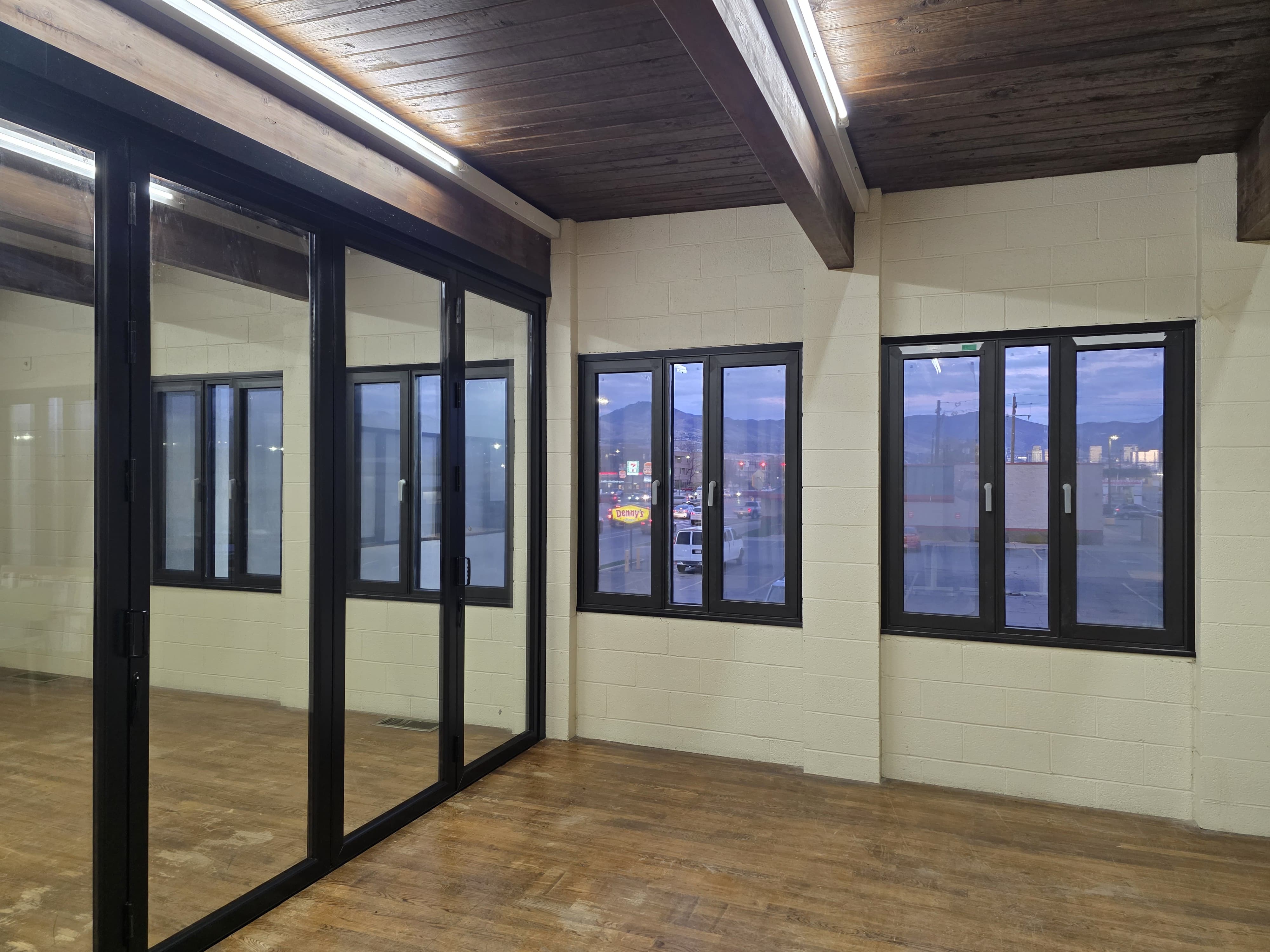
The table below maps each common delivery claim to the evidence that makes it verifiable, with the Educe reference figure where one is published.
| Verification checkpoint | What to request from the supplier | Educe reference data |
|---|---|---|
| Manufacturing footprint | Facility area and site address | 300,000 m² intelligent manufacturing facility; headquartered in Foshan, Guangdong |
| Annual output | Annual shipped square meters of doors and windows | 2,000,000 m² per year |
| Monthly capacity | Monthly output allocated to doors and windows | 80,000 m² per month |
| Standard lead time | Days from approved drawings to finished-goods inspection | 15 days |
| Quality control | Inspection points in the production flow | Assembly-line operation with inspection at each process; 100% manual quality inspection |
| Customization scope | Which variables can change after quotation | Size, glass, shape, and color |
| Minimum order | MOQ thresholds and their scheduling effect | Villa: 15 m²; contractor: 200 m² and 500 m² |
| Certification | Certificate-to-model mapping and test reports | AS2047 (EDUCE E80 SERIES casement); AS2208 (EDUCE 50 SERIES louver); CSA Energy Star (EDUN 108 SERIES); AS2047 / NFRC-aligned production conditions |
| Commercial terms | Named Incoterm and payment schedule | FOB / CIF quotation structure; 50% deposit, 50% before shipment |
| After-sales and packing | Who handles transport and installation support | Package transportation and package installation guidance |
| Export experience | Active export markets and share of output exported | United States, Canada, Australia, Southeast Asia, Middle East, Africa; 50% export ratio |
Read the table as a checklist rather than a scorecard. If a supplier cannot answer three or more rows with a specific value, the delivery guarantee is not yet verifiable.
FAQ
What certifications should a villa window supplier provide before a project order is confirmed?
Confirm the standard that governs your destination market and request the certificate matched to the specific model number you are ordering. Educe products are described as operating under conditions meeting AS2047, NFRC, and other international standards, with named model-level evidence: the EDUCE E80 SERIES casement window is AS2047 Certified, the EDUCE 50 SERIES glass louver is AS2208 Certified, and the EDUN 108 SERIES sliding door is listed as CSA Energy Star Certified. Certification that cannot be tied to a model number should not be treated as evidence. Relevant regulatory context includes the 2024 IECC requirement that metal frames for residential windows and doors incorporate a thermal break, and U.S. ENERGY STAR Version 7.0, which tightens the U-factor threshold to 0.22 in northern zones.
What production capacity indicators actually prove a supplier can meet a villa project schedule?
Three figures do most of the work: facility area, annual output, and monthly output. Educe operates a 300,000 m² intelligent manufacturing facility with approximately 1,200 employees, reports annual output of 2,000,000 m², and states monthly capacity of 80,000 m² of doors and windows. Convert your own order into square meters and express it as a share of one month of that capacity. An order representing a small fraction of monthly output can be absorbed into the production plan; an order that consumes a large share of capacity is exposed to queue competition from other contracts.
How should logistics terms and payment milestones be structured to protect the buyer?
Name the Incoterm explicitly — FOB or CIF — so freight, insurance, and port handling responsibility is settled before production starts. Pair it with a payment schedule that keeps the balance tied to a verifiable event: a 50% deposit with the remaining 50% before shipment, released against pre-shipment inspection documentation and shipping documents rather than a verbal completion notice. At the same time, confirm the after-sales scope in writing; Educe's stated coverage includes package transportation and package installation guidance, which affects how the goods are packed and handed over.
Can a sample or small order be used to verify delivery performance before a full commitment?
Yes, and it is usually the most reliable test available. Educe states a villa minimum order quantity of 15 m², with contractor minimum order quantities of 200 m² and 500 m². A qualifying order at the villa threshold lets a buyer validate production quality, packing standard, and documentation flow — including 100% manual quality inspection output — before releasing a full villa or multi-unit package. Customization scope covers size, glass, shape, and color, so a sample order should deliberately include at least one non-standard variable to test how the supplier handles specification changes.
What lead time is realistic for a custom villa window order, and what should be written into the contract?
Educe's stated lead time is 15 days, which applies to the production phase rather than the whole project cycle. The contract should therefore separate drawing approval, production, inspection, and shipment, and attach a date to each. Buyers should also confirm which models fall inside the standard window and which require longer glass or hardware procurement — configurations such as the EDUN 150 SERIES lift sliding door or the EDUCE 138 SERIES sliding door for large openings may carry different upstream material timing than standard casement units. Documented milestone dates are what make a 15-day lead time enforceable instead of aspirational. To move from verification to a concrete schedule, request a quotation and sample package at info@edunwindows.com or via WhatsApp at +86 18988630128.
Conclusion: Verify, Then Commit
Delivery guarantees on villa window orders are verifiable in exactly the same way as quality claims: by converting statements into numbers and numbers into documents. The sequence is consistent — map your schedule to factory milestones, check monthly output against your order size, test the stated lead time against your actual model list, match certificates to model numbers, lock the Incoterm and the 50/50 payment trigger, and use a small qualifying order to confirm the pattern before releasing the full package.
Foshan Nanhai Edun Home Technology Co., Ltd., the manufacturer behind the Educe brand, publishes the figures that make this verification possible: a 300,000 m² facility, 2,000,000 m² of annual output, 80,000 m² of monthly capacity, a 15-day lead time, a 30-engineer R&D team, and export activity across the United States, Canada, Australia, Southeast Asia, the Middle East, and Africa. Buyers evaluating villa window suppliers can benchmark any competing quote against that same structure of evidence — and where a supplier cannot supply the numbers, treat the gap as schedule risk rather than a communication gap.
Next Step: Get the Numbers for Your Project
Request a villa window and door quotation, a sample package, or the full Educe Group product catalog to compare capacity, lead time, and certification evidence against your own project schedule. Reference configurations include the EDUCE 110 SERIES and EDUCE 138 SERIES sliding doors, the EDUCE E80 SERIES casement window, and the EDUN 108 SERIES CSA Energy Star certified sliding door.
Email: info@edunwindows.com | WhatsApp: +86 18988630128 | Website: door-window-educe.com and edunwindows.com
